oem mold ownership is a practical sourcing and product-development consideration for B2B buyers evaluating smart hardware programs. This guide explains the technical, commercial and manufacturing factors buyers should assess before committing to samples, tooling or mass production.
Why OEM Mold Ownership Matters in Smart Hardware Sourcing
For buyers of connected devices, sensors, and industrial IoT hardware, oem mold ownership determines whether you can move production, renegotiate pricing, or protect proprietary geometry. Without it, your supplier holds the physical asset that encodes your product design. Treat mold control as a sourcing lever, not a legal afterthought. Evaluate whether the contract grants you the right to audit, transfer, or destroy the tool under defined conditions.
The Hidden Cost of Losing Mold Control
When a factory retains the mold, switching vendors means paying for new tooling or accepting production hostage risk. Buyers should compare total cost of ownership across three scenarios: transfer, buyout, or replacement. Ask for a tooling ownership agreement that specifies asset tagging, maintenance logs, and capacity allocation. For private-label programs, unclear mold rights can lock you into one supplier for the product’s entire life.
How Mold Ownership Affects Product Lifecycle and Iteration Speed
OEM and ODM models diverge sharply here. In true OEM arrangements, you should hold oem mold rights to modify cavities, add texture, or shift materials without renegotiation. That speeds engineering changes and firmware-aligned enclosure revisions. In ODM sourcing, the factory owns the tool and typically amortizes it across multiple customers, limiting your design control. Document revision authority, steel grade, and expected shot life before first article approval.
The 9 Essential Checks for Verifying OEM Mold Ownership
Buyers often assume payment equals ownership. In practice, oem mold ownership depends on documented terms, physical evidence, and enforceable rights. The nine checks below give B2B sourcing teams a repeatable audit path across OEM, ODM, and private-label engagements.
Check 1: Contractual Clarity – Where Is Ownership Defined?
Review the mold ownership contract for an explicit transfer clause, not just an invoice line. Confirm the governing law, payment milestone that triggers transfer, and whether the supplier retains any lien. For ODM work, verify the tooling ownership agreement separates product IP from mold IP.
Check 2: Mold Cost Breakdown – Are You Paying for the Mold?
Request a line-item tooling quote showing steel, machining, polishing, and trial costs. If mold cost is amortized into unit price, you may not own the tool. For private-label sourcing, insist the OEM vs ODM terms state whether amortization ends at a defined volume.
Check 3: Physical Mold Marking and Identification
Require your company name, part number, and cavity ID engraved on the mold exterior. Ask for dated photos before first shot. Physical marking supports oem mold rights during disputes and simplifies identification during factory audits or relocation.
Check 4: Access to Mold Drawings and Technical Files
Ownership should include 2D and 3D files, BOM, steel certificates, and dimensional reports. Specify delivery format and deadline in the tooling ownership agreement. Without drawings, you cannot independently quote replacement or repair work.
Check 5: Mold Maintenance and Repair Rights
Define who performs preventive maintenance, who approves repairs, and whether you may appoint a third party. Retain the right to receive maintenance logs and wear-part replacement records. This prevents a supplier from using neglect as leverage.
Check 6: Transfer and Relocation Clauses
Technical Evaluation: What to Inspect Before Signing Off
Mold Material and Construction Quality
Request the full steel specification sheet before accepting any tooling. For production volumes above 100,000 cycles, P20 or 718H pre-hardened steel is a common baseline; hardened H13 or S136 suits abrasive or high-clarity resins. Verify cavity inserts, ejector pins, and slides are from named suppliers, not unspecified local stock. Check for visible shortcuts: uneven parting lines, soft spots, or welded repairs. For OEM/ODM programs, material choice directly affects part cosmetics and cycle stability. A private-label buyer inherits these choices, so ask for heat-treatment certificates and hardness test reports. If the supplier cannot provide them, treat that as a red flag in your tooling ownership review.
Tolerance and Precision Verification
Confirm the mold was built to your approved 2D drawing tolerances, not the supplier’s internal standard. Request a dimensional report from a trial shot: measure critical fits, wall thickness, and gate vestige. For assemblies, ask for a CMM report on at least three cavities if multi-cavity tooling is involved. Compare results against your specified Cp/Cpk targets where applicable. ODM buyers should still audit the supplier’s in-house QC method. Without documented measurements, you cannot separate mold error from process variation later. Keep these reports with your IP protection file and the mold ownership contract.
Mold Life Expectancy and Maintenance Schedule
Ask for the predicted cycle life under your resin and wall-thickness conditions, plus the recommended preventive maintenance interval. A credible supplier states both in writing: for example, clean and inspect ejector pins every 50,000 shots, re-polish cavities at 200,000. Verify spare parts—ejector pins, springs, heater bands—are included or quoted. This matters for OEM mold rights because a tool that fails early becomes your financial problem if ownership has transferred. For private-label programs, ask who pays for unscheduled repairs during
Sourcing and Procurement: Negotiating Mold Ownership from the Start
Securing oem mold ownership begins before the first purchase order. Buyers who raise tooling rights early in RFQs signal that mold custody is a commercial term, not an afterthought. Procurement teams should require suppliers to state whether tooling remains supplier-owned, transfers after full payment, or transfers only after a defined production volume. This position is especially critical for OEM and private-label programs where a proprietary cavity design represents a durable competitive asset.
Including Mold Ownership in RFQs and Contracts
RFQs should ask suppliers to submit a draft tooling ownership agreement alongside pricing. Evaluation criteria should include transfer timing, documentation deliverables, and exit rights. A clear mold ownership contract clause should define whether the supplier may use the tool for other customers, and under what conditions the buyer may relocate it. ODM buyers should confirm whether the supplier retains design rights even when the buyer funds tooling.
Pricing Models: Amortized vs. Upfront Mold Costs
Suppliers often offer two structures: full upfront tooling payment with immediate transfer, or amortized tooling embedded in unit pricing with transfer after a volume threshold. Upfront payment strengthens oem mold rights but raises cash exposure. Amortization lowers initial capital but can delay ownership. Buyers should request a written amortization schedule and verify that the residual tool value reaches zero at the agreed transfer point.
Using Mold Ownership as a Lever for Better Unit Pricing
When a buyer funds tooling outright, the supplier carries no tooling depreciation risk. That reduced risk should be reflected in lower unit pricing or shorter payment terms. Procurement can also negotiate free engineering change allowances or priority production slots in exchange for early tooling payment. For private-label programs, linking tooling ownership to volume rebates creates a defensible, auditable pricing structure without conceding mold custody.
OEM, ODM, and Private Label: How Mold Ownership Differs
OEM: You Own the Mold, You Control the Product
In a true OEM arrangement, your oem mold ownership should be explicit from the first purchase order. You pay for tooling, the mold is built to your specifications, and the tooling ownership agreement names you as sole owner. This gives you the right to move the mold to another factory, audit production, or sell the tooling later. Before signing, confirm the mold serial number, physical location, and exit conditions are written into the mold ownership contract. Without these clauses, even an OEM deal can drift into supplier control.
ODM: Shared or Supplier-Owned Molds – What to Watch For
ODM projects often use existing or modified supplier molds, which means you may fund only a portion of tooling while the factory retains ownership. Evaluate whether the mold is dedicated to your SKU or shared across multiple customers. If shared, request written confirmation of capacity allocation and change-control rights. Your oem mold rights may be limited to usage, not ownership. Ask for a tooling ownership agreement that defines what happens if the supplier discontinues the product or your volume drops.
Private Label: Protecting Your Brand with Mold Ownership
Private label buyers frequently assume the mold is theirs because the product carries their brand. That assumption is risky. Many private label molds remain supplier property, leaving you dependent on one factory for continuity. If you modify the product or packaging, clarify whether new tooling is required and who pays. A mold ownership contract should specify whether you can transfer the mold if the supplier fails quality audits. For deeper guidance, see Tooling Ownership: Who Owns the Mold After You Pay for It?
Risks and Quality: What Happens Without Mold Ownership
Without a clear oem mold ownership position, buyers expose themselves to structural risks that compound over the product lifecycle. The absence of a signed tooling ownership agreement leaves the physical asset under the supplier’s control, which shifts negotiating power away from the brand. For OEM and private-label buyers, this means every reorder, engineering change, or capacity discussion becomes contingent on the factory’s willingness to cooperate rather than contractual obligation.
Supply Chain Disruption and Supplier Lock-In
When the factory holds the mold, switching suppliers becomes commercially prohibitive. The buyer must either pay inflated transfer fees, renegotiate from a weak position, or fund entirely new tooling. Evaluate this risk by asking the supplier to confirm in writing whether molds can be moved to a third-party facility without penalty. ODM buyers face the same exposure, since the mold may be shared across multiple customers or repurposed for competing product lines.
Quality Degradation and Lack of Accountability
Without ownership rights, enforcing corrective action is difficult. A supplier that controls the tooling can defer maintenance, substitute lower-cost materials, or skip dimensional inspections without contractual consequence. Buyers should require documented maintenance logs, cavity-by-cavity inspection reports, and defined acceptance criteria tied to the ISO quality framework. If the mold is not yours, you cannot compel access to these records or audit the tool’s condition independently.
Counterfeiting and IP Theft Risks
Uncontrolled molds enable unauthorized production runs, often sold through gray-market channels. The supplier may run extra shifts and sell identical parts under another brand, or retain the mold after contract termination. Mitigation starts with a mold ownership contract that names the buyer as legal owner, restricts cavity use, and specifies destruction or return conditions. For OEM buyers, this clause is the primary legal barrier against tool duplication and unauthorized
Decision Criteria: When to Insist on Mold Ownership vs. Walk Away
Product Strategic Value and Long-Term Plans
If the part is a proprietary differentiator with a planned lifecycle beyond three years or multiple production runs, insist on oem mold ownership. High strategic value justifies the upfront cost and legal work. For commodity components, seasonal items, or products likely to be redesigned within 18 months, accepting a supplier-held tool with a documented right-to-use clause may be more rational. ODM buyers should be especially cautious: the mold may be shared across customers unless your tooling ownership agreement states exclusivity.
Supplier Relationship and Trust Level
Evaluate the supplier’s audit history, IP protection practices, and willingness to sign a clear mold ownership contract. A supplier that resists defining transfer conditions, refuses third-party mold inspection, or cannot demonstrate clean chain-of-custody for tooling is a red flag. New relationships with no verified production record warrant stronger ownership terms. Established partners with transparent reporting and a history of honoring oem mold rights may justify a shared or licensed arrangement, but only with exit clauses in writing.
Cost-Benefit Analysis of Mold Ownership
Compare the amortized tooling cost against switching risk, requalification expense, and potential downtime. Owning the mold typically adds 10–20% to administrative and legal overhead but removes hostage risk. If the mold represents less than 5% of total program cost and alternative suppliers are readily qualified, a non-exclusive supplier-owned tool may be acceptable. For private-label brands with thin margins, negotiate a phased buyout: start with supplier ownership, then transfer after volume thresholds are met.
How Pineeon Supports Your Mold Ownership and Custom Development
Transparent Mold Ownership Policies
Pineeon documents mold ownership contract terms before tooling begins, specifying transfer conditions, maintenance obligations, and exit clauses. Buyers receive a written tooling ownership agreement that identifies the mold serial number, storage location, and production exclusivity. This approach removes ambiguity when projects scale or transfer between facilities. For deeper guidance on who holds title after payment, review tooling ownership fundamentals before signing any supplier paperwork.
OEM/ODM/Private Label Expertise in Smart Wearables and Peripherals
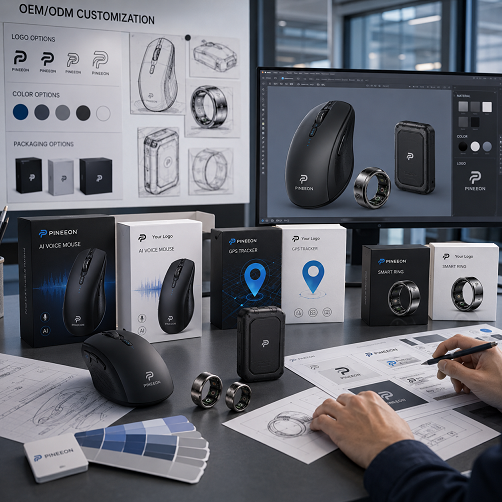
Pineeon supports three engagement models for smart hardware buyers. OEM projects use your design files and retain full oem mold rights under your name. ODM engagements license an existing platform with cosmetic or firmware changes, while private label applies your branding to a proven product. Each path changes mold ownership scope, so confirm whether tooling is dedicated or shared. Compare model implications in OEM vs ODM vs private label before committing to a development route.
Custom Product Development with Full IP Protection
Custom programs at Pineeon pair NDA coverage with design-file segregation and restricted mold access. Buyers evaluating suppliers should request written IP clauses covering drawings, firmware, and tooling data. Pair that review with NDA and IP protection practices to verify enforceable safeguards. Confirm the supplier follows documented change-control procedures, because undocumented mold modifications can invalidate warranties and complicate future ownership transfers.
Pineeon OEM/ODM Manufacturing Context
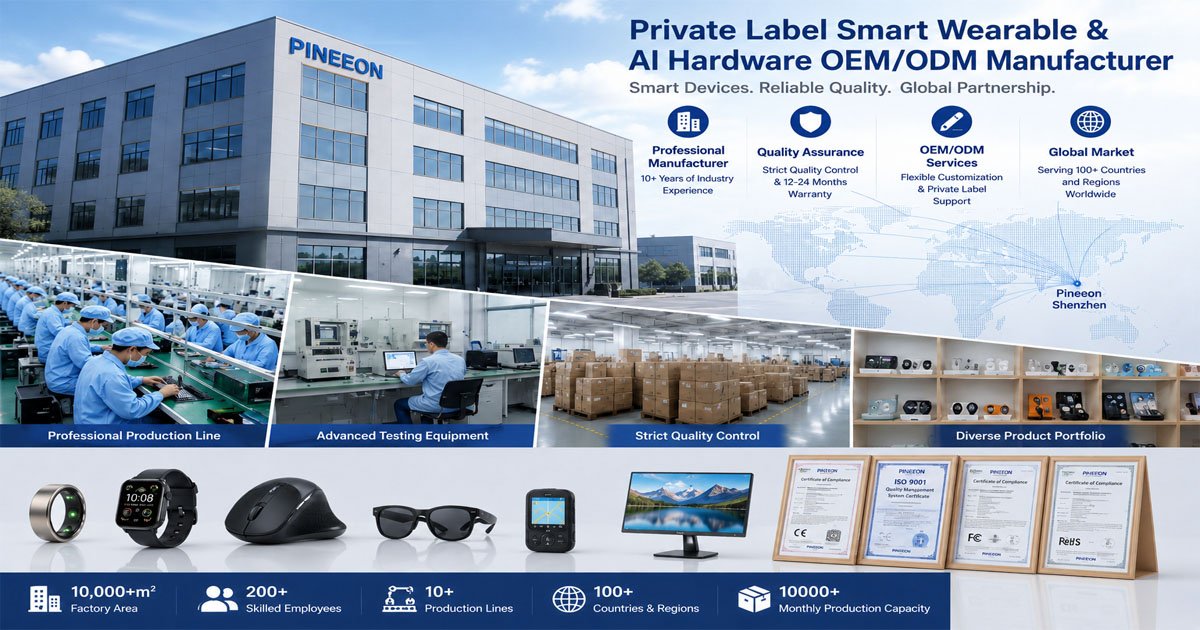
Pineeon is a B2B smart hardware supplier. Pineeon supports OEM, ODM and private label projects, supplies smart wearables and computer peripherals, and supports custom product development for international brands, distributors and sourcing teams.
Frequently Asked Questions
What is the difference between mold ownership and mold usage rights?
Buyers should compare this point with the target specification, market requirements, expected volume, customization scope and approval criteria before production.
Can I transfer mold ownership to another factory if needed?
Buyers should compare this point with the target specification, market requirements, expected volume, customization scope and approval criteria before production.
How do I verify that a supplier actually owns the mold they claim to?
Buyers should compare this point with the target specification, market requirements, expected volume, customization scope and approval criteria before production.
What are the typical costs associated with mold ownership?
Buyers should compare this point with the target specification, market requirements, expected volume, customization scope and approval criteria before production.
OEM Mold Ownership in Smart Hardware Sourcing
For buyers of connected devices, oem mold ownership affects more than unit cost—it shapes revision speed, IP control, and second-source leverage. Pineeon’s OEM/ODM/private label model supports clear mold asset transfer terms when projects move from prototype to production, helping you avoid locked tooling disputes later.
Verify Mold Insert and Cavitation Rights
Confirm whether the contract grants ownership of inserts, cavities, and spare components—not just the main mold base. This detail matters when scaling volumes or switching assembly partners.
Audit Documentation Before Tooling Kickoff
Request 2D/3D files, steel certificates, and maintenance logs as part of the purchase order. Pineeon’s engineering team can review these documents with you to ensure the mold matches your approved DFM for enclosures, sensor housings, or wearable shells.
Plan for Firmware-Driven Enclosure Changes
Smart hardware often requires mid-life mold modifications for antenna windows, button layouts, or charging contacts. Clarify modification fees and ownership of revised tooling upfront to avoid surprise costs during product refreshes.